A box of old cards in the loft can be worth a few pounds or a few hundred, and where you sell it decides how much of that you see, and how much work it costs you. There are three routes: sell to a local shop (fast, lowest price), consign through a shop (slower, better for valuable cards), or sell online yourself (best price, most work).
First, find out what you have
Give yourself an evening and a big table.
- Sort by game, then by set. The set symbol is printed on each card, usually near the bottom or beside the artwork.
- Pull out the candidates: foil or holographic cards, older sets, rare symbols, anything already in a graded case.
- Put the rest in "bulk": common and uncommon cards, which make up most of any collection.
- Be honest about condition: creases, scratches, bent corners and whitened edges all lower the value. A card that looks fine under a lamp may not at an angle.
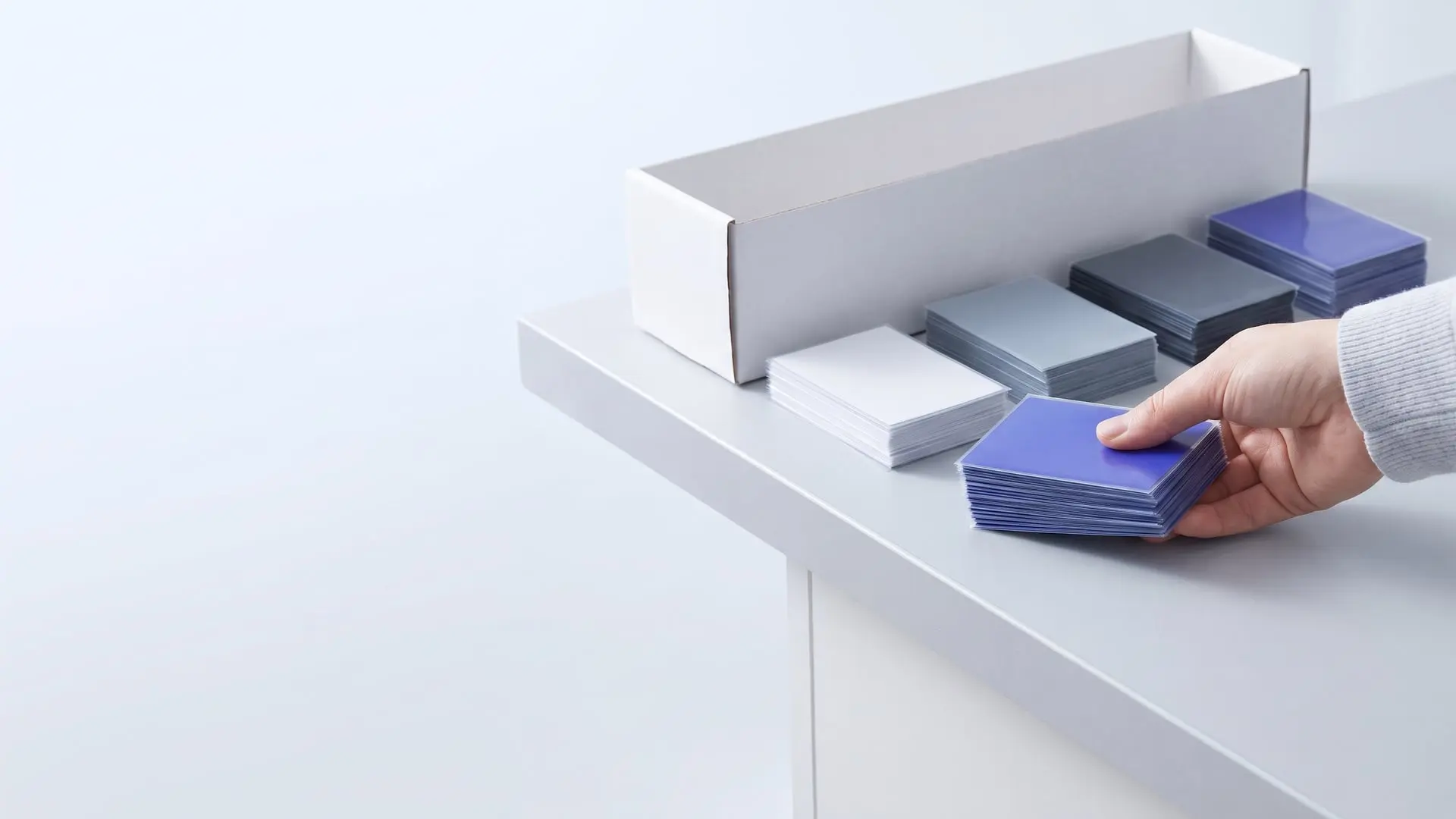
Put the candidates into sleeves straight away. Our guide to protecting cards without overspending explains which sleeves and toploaders to use.
Check prices without fooling yourself
A classic mistake is to look up asking prices, not selling prices. A card listed at £40 that never sells is not worth £40.
In Europe, many players check Cardmarket, a marketplace run from Berlin that covers Pokémon, Magic, Yu-Gi-Oh!, One Piece, Lorcana and many other games. Each card page shows a price trend and a 30-day average based on actual sales. On eBay, filter by "sold items" to see what people really paid.
Two things change the price a lot:
- Condition: the same card can be worth very different amounts in mint and in played condition.
- Language and print: a first edition, a different language or a special print can be priced quite differently from the standard English card.
Route 1: selling to a local shop
The shop pays you straight away and takes on everything else: the risk that a card won't sell, the time to list it, the storage, the shop's rent. That's why its offer is below the price it will sell the card for.
- Cash or store credit: many shops offer more in credit than in cash. If you still play, credit is often the better deal.
- What shops often don't buy: bulk commons, damaged cards, games they don't sell.
- When it's the right choice: you want it done today, the collection is large and mixed, or you'd rather not deal with buyers and shipping.
Route 2: consignment
Some shops will sell cards for you and keep a share when they sell. You wait longer, but you usually get closer to the market price, which is why it suits a handful of valuable cards better than a box of bulk.
Before you agree, ask: what share does the shop keep? For how long are the cards on sale? What happens to cards that don't sell? Who is responsible if a card is damaged or lost? Get the list of cards and the agreed terms in writing.
Route 3: selling online yourself
You get the most money, and you do all the work: photos, listings, questions from buyers, packing, posting, and the occasional dispute.
- Cardmarket: priced card by card, with buyers across Europe. Check its fee page before you list.
- eBay: private sellers in the UK pay no final value fees on most items, and "sold" listings help you price.
- Vinted: no selling fees; simple for bundles and complete sets.
Selling online is not worth it for bulk: listing and posting a card worth a few pence costs more time than it earns.
Bulk: what to do with thousands of commons
- Sell it by the box: some shops buy bulk by weight or by count, so ask.
- Give it away: schools, youth clubs and beginners' leagues at your local shop may be glad of starter cards.
- Keep a trade binder: a few hundred commons are useful for trading at league nights.
Questions to ask a shop before you sell
- Do you pay in cash, in store credit, or both, and how much for each?
- Which games do you buy?
- How do you grade condition?
- Do you buy bulk, and how?
- Do I need ID? Some shops won't buy from under-18s without a parent present, so ask before you go.
Shops that sell single cards are the natural place to start. On Boardoro, 28 shops in seven European countries mark on their page that they sell singles (as of 23 November 2026); the marker is optional, so the list is not complete. Our analysis of which shops list many card games shows where the broadest ranges are, and Stores near me finds the nearest ones.
Selling a child's collection
If the cards belong to your child, sort them together. Let them keep their favourites first, check the value of the rest, and decide jointly what to sell. Children often care more about a few cards than about the money, and a few sleeved favourites are worth keeping whatever the price guide says.
Drafted with AI assistance and checked by the editor before publication. How we report.